
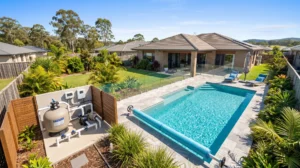
When your pool starts losing water, one of the first questions worth answering is: is this coming from the pool itself, or from the pump, pipes, and equipment around it? The answer changes everything about how urgent the problem is and what it will cost to fix.
Why the Distinction Matters
Structural leaks, cracks in the shell, a failed light niche, a damaged skimmer mean water is escaping from the pool body itself. Left unaddressed, these can undermine the surrounding soil, cause paving to crack or sink, and in worse cases affect the pool’s foundation.
Equipment leaks happen in the plumbing and filtration system: the pump, filter, chlorinator, valves, and the pipework connecting them. These are often easier and cheaper to fix, and while they still waste water and money, they typically don’t threaten the structural integrity of the pool itself.
Telling them apart early can save you an unnecessary structural investigation, or stop you from ignoring a genuine structural issue because you assumed it was “just the pump.”
Signs You’re Likely Dealing With an Equipment Leak
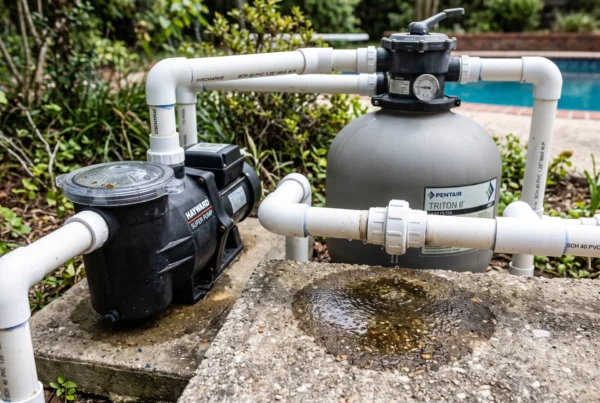
- Wet patches around the pump or filter housing, especially after the system has been running
- Water loss only occurs when the pump is on, not when it’s switched off overnight
- Visible drips, spray, or pooling water near valves, unions, or pipe joints in the equipment area
- A hissing or gurgling sound coming from the pump, which can indicate an air leak on the suction side (this won’t lose pool water directly, but signals a problem worth checking)
- Recently serviced equipment that hasn’t been reassembled correctly
Equipment leaks are usually visible if you know where to look, since the pump and filter are above ground and accessible. A slow drip from a union fitting or a cracked pipe near the equipment pad is often diagnosable without any specialised gear.
Signs You’re Likely Dealing With a Structural Leak
- Water loss continues even with the pump completely switched off
- Cracks appearing in the pool shell, tiles, or surrounding paving
- The pool deck or coping feels soft, spongy, or is visibly sinking in one area
- Water loss doesn’t slow down even after equipment has been checked and ruled out
- A noticeable drop below a specific point, many structural leaks stop losing water once the level drops to just below the leak itself (for example, at a light fitting or skimmer mouth)
Structural leaks are far harder to diagnose without professional equipment, because the leak point is often below the waterline, underground, or behind tiles and render.
The Simplest First Test
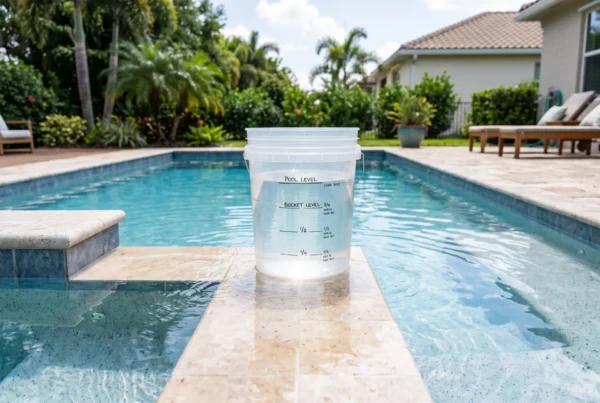
Before calling anyone, the classic bucket test can help narrow things down. Run the pool normally (pump on) for 24 hours and compare water loss to a control bucket. Then repeat with the pump switched off for 24 hours. If the pool loses noticeably more water with the pump running, equipment or pressure-side plumbing is the likely culprit. If it loses a similar amount either way, you’re more likely looking at a structural leak in the shell or suction-side plumbing.
When It’s Time to Call a Professional
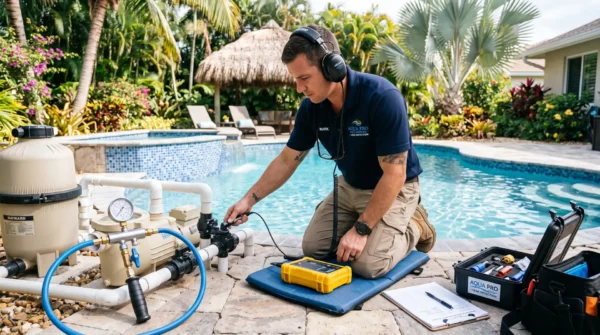
If you’ve ruled out obvious equipment issues and the leak persists, or if you’re seeing any signs of structural movement (cracking, sinking paving, soft ground), it’s time for a proper inspection. Professional technicians use pressure testing, dye testing, and sometimes electronic leak detection to pinpoint the exact location, structural or otherwise, without the guesswork.
Our team inspects both equipment and structural leaks across South East Queensland, and we’ll always tell you plainly which one you’re dealing with before any repair work begins. Book an inspection here.